Services · six of them, on purpose

What you get, not what we sell.

Agencies list deliverables. Founders care about outcomes. So everything below is written as the thing you'll have at the end, and what it costs to get there.

MVP Development

You'll have a real product in front of real users inside eight weeks — small enough to finish, sharp enough to charge for.
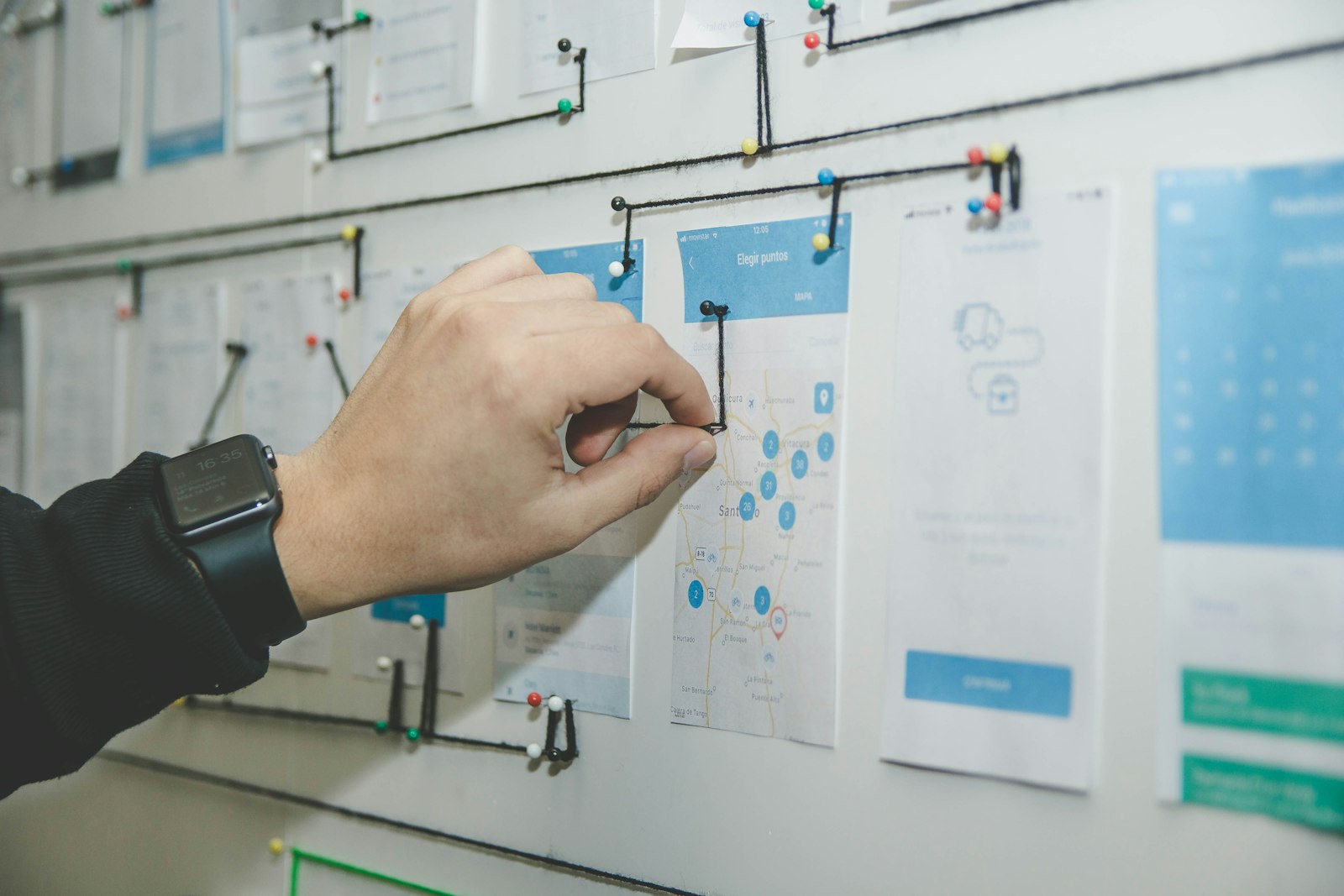
A designer moving sticky notes across a whiteboard while scoping an MVP.
Why founders call us

The scope keeps growing

Every conversation adds a feature and nobody's brave enough to remove one. We're paid to be the person who removes one.

Why founders call us

The last agency stalled

Six months in, three invoices deep, no link you can send anyone. We start most rescues by deleting things.

How it works

One page, then build

We cut your brief to a single page you actively agree with, then build only what's on it. Anything new goes on a list for version two.

How it works

Friday demos, always

A working staging link from week three and a demo every Friday. You never have to ask how it's going.

You end up with

  • Live product
  • Source in your repo
  • Design system
  • Analytics wired up
  • Deploy pipeline
  • V2 backlog, prioritised

Product & UX Design

You'll have an interface people understand without a tutorial, and a system your next designer can extend without permission.

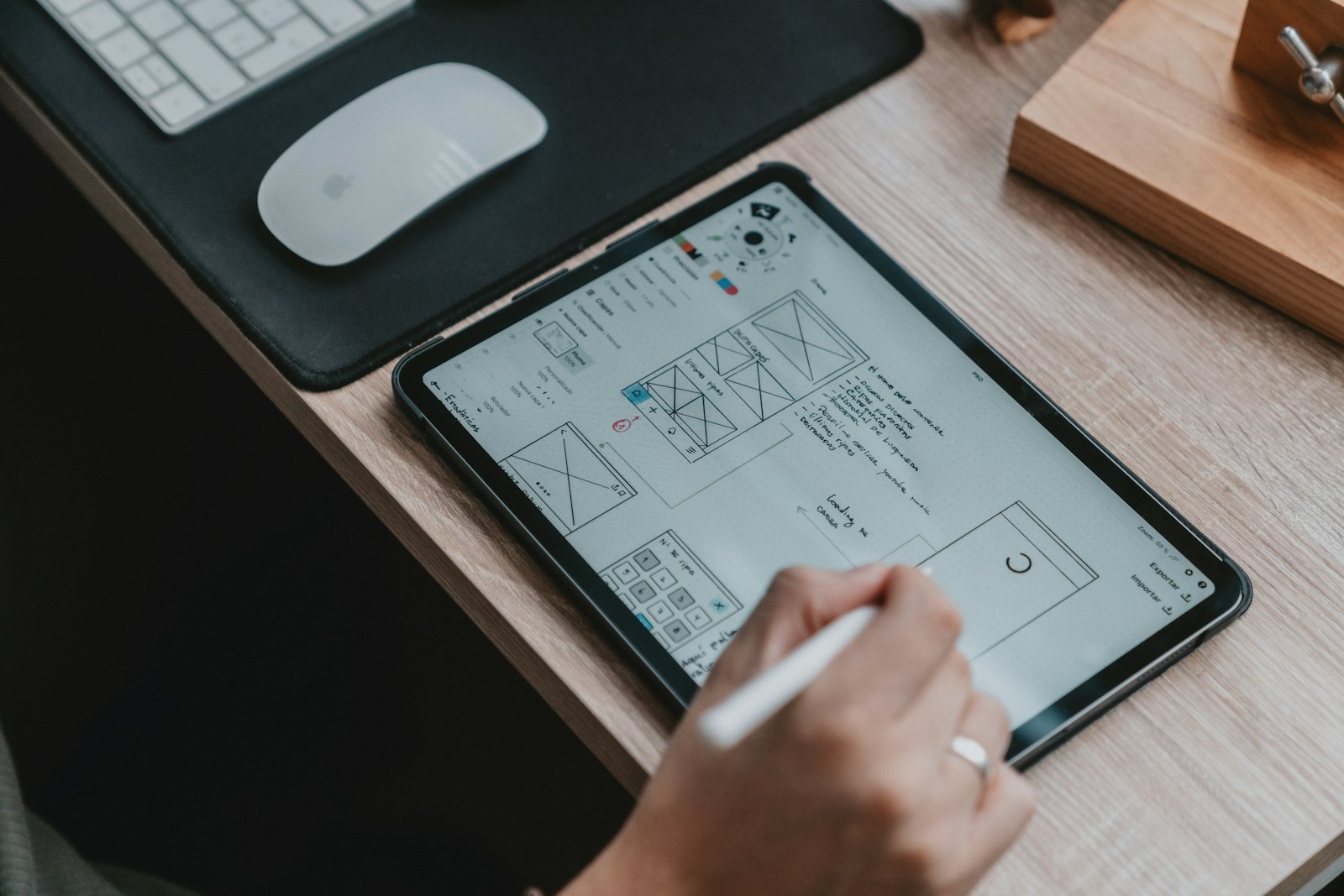
Wireframe sketches and interface layouts spread across a desk.
Why founders call us

It looks fine, nobody converts

Usually the flow is wrong, not the visuals. We watch five people use it before we touch a single colour.

Why founders call us

The Figma doesn't match the app

Because it was drawn by someone who never had to build it. Ours maps one-to-one to real components.

How it works

Flows before screens

We map every path including the ugly ones — errors, empty states, the moment someone's card declines. Those are the screens that decide whether people stay.

How it works

Designed to be built

Tokens, spacing scale, states, accessibility baked in. Contrast checked at AA before it leaves the file, not after a customer complains.

You end up with

  • User flows
  • Clickable prototype
  • Component library
  • Design tokens
  • Research notes & clips
  • Accessibility pass

Mobile Apps

You'll have an app on both stores that feels like it belongs on the device, and a release process that doesn't need us.

A phone held in one hand showing a grid of app icons.
Why founders call us

The web app feels wrong in a hand

Wrapping a website in a shell gets you a one-star review about scrolling. We build native where it counts.

Why founders call us

App Review keeps rejecting us

We've been through it sixty-odd times. We know which rules are real and how to word an appeal that works.

How it works

Native, or a very good reason

Swift and Kotlin by default, React Native or Kotlin Multiplatform when sharing logic genuinely pays for itself. We'll show you the maths either way.

How it works

Offline is a feature

Trains, basements, festivals, rooftops. If your users go there, the app works there — local-first with sync that resolves conflicts sensibly.

You end up with

  • iOS + Android builds
  • Store listings & assets
  • TestFlight / internal track
  • Crash + performance monitoring
  • Push notifications
  • Release runbook

Web Applications

You'll have software people keep open all day: fast, boring in the right places, and cheap to change six months from now.

A developer's screen showing application code in a warm-lit room.
Why founders call us

The prototype won't scale

It got you to twenty customers and now it falls over at two hundred. Common, fixable, usually not a rewrite.

Why founders call us

Ops is drowning in spreadsheets

Internal tools are the highest-return software most companies never build. We build them in weeks, not quarters.

How it works

Boring technology, deliberately

TypeScript, Postgres, a managed platform. We spend our novelty budget on your product, not on your infrastructure.

How it works

Fast by default

Performance budgets set in week one and enforced in CI. If a page gets slow, the build fails before your users notice.

You end up with

  • Production app
  • CI/CD + preview envs
  • Test suite that matters
  • Observability & alerts
  • Documented data model
  • Admin tooling

Growth Engineering

You'll know which numbers moved and why — and you'll have shipped the changes that moved them, not just a deck about them.

A screen showing a rising conversion-rate line chart.
Why founders call us

Signups are fine, nobody sticks

Activation is nearly always an onboarding problem wearing a marketing costume. We fix the first ten minutes.

Why founders call us

Nobody can agree what's working

Because the tracking is wrong. We instrument properly first so the arguments get shorter.

How it works

Measure, then guess

Two weeks of clean instrumentation before any experiment. Half of what you'd have tested becomes obviously pointless, which saves you a quarter.

How it works

Ship weekly, kill fast

One experiment live per week. Losers get reverted the same day without a post-mortem meeting. Winners get built properly.

You end up with

  • Event tracking plan
  • Funnel dashboards
  • Onboarding rebuild
  • A/B testing harness
  • Lifecycle emails
  • Experiment log

Fractional CTO & Tech Advisory

You'll have someone senior on the hook for the technical calls — hiring, architecture, vendors, and the quotes that smell wrong.

Two people in a candid working session discussing technical strategy.
Why founders call us

Non-technical founder, technical decisions

You need someone whose only incentive is your outcome, sitting on your side of the table when the quotes come in.

Why founders call us

Engineers, but nobody steering

Good people shipping in six directions. We set the direction and let them get on with it.

How it works

Two days a week, in your Slack

Standing calls, architecture reviews, roadmap pressure-testing, and the unglamorous work of writing decisions down.

How it works

Hiring you'll keep

Scorecards, take-homes worth someone's evening, and interview panels we sit on until your first two engineers are in and settled.

You end up with

  • Architecture decision records
  • Technical roadmap
  • Hiring plan & scorecards
  • Vendor & build-vs-buy calls
  • Due-diligence prep
  • Security & GDPR baseline
07

Questions we
get every week

If yours isn't here, email it. We answer these properly rather than routing you to a sales call.

Yes, and it only works because of what we leave out. Eight weeks buys you one core workflow done properly, with auth, payments and analytics around it. It does not buy you three user types, an admin portal and an integrations marketplace. If your idea genuinely can't be cut that small, we'll tell you on the first call and quote sixteen weeks instead.

You do, from the first commit. We work in your GitHub organisation and your Figma from day one, so there's never a handover moment where we hold anything hostage. When the final invoice clears, full IP assignment is automatic — it's written into the contract, not something you have to ask for.

Two weeks of us on call are included, which is when the real bugs show up. After that most clients either take it in-house — we'll help you hire — or keep us on a small monthly retainer for a couple of days a month. We don't lock anyone into support contracts; if the code is good you shouldn't need one.

Occasionally, for up to a third of the fee, and only for projects we'd be excited to work on at full price anyway. Equity-only doesn't work: we're six people with rent, and a studio that needs your exit to survive gives you worse advice, not better.

Always. There are six of us and no bench, so the people on your kickoff call are the people writing the code. Nobody gets swapped for a cheaper resource in month two, because we don't have one.

Often, yes — usually as design plus a second pair of senior hands, or as fractional CTO alongside your team. What we won't do is drop two contractors into your standup and bill by the hour. If that's what you need, there are cheaper places to get it.

Free, thirty minutes, no deck

Not sure which one you need?

Most people aren't. Describe the problem in plain language and we'll tell you which of the six actually applies — including "none of them, here's who to call instead".